

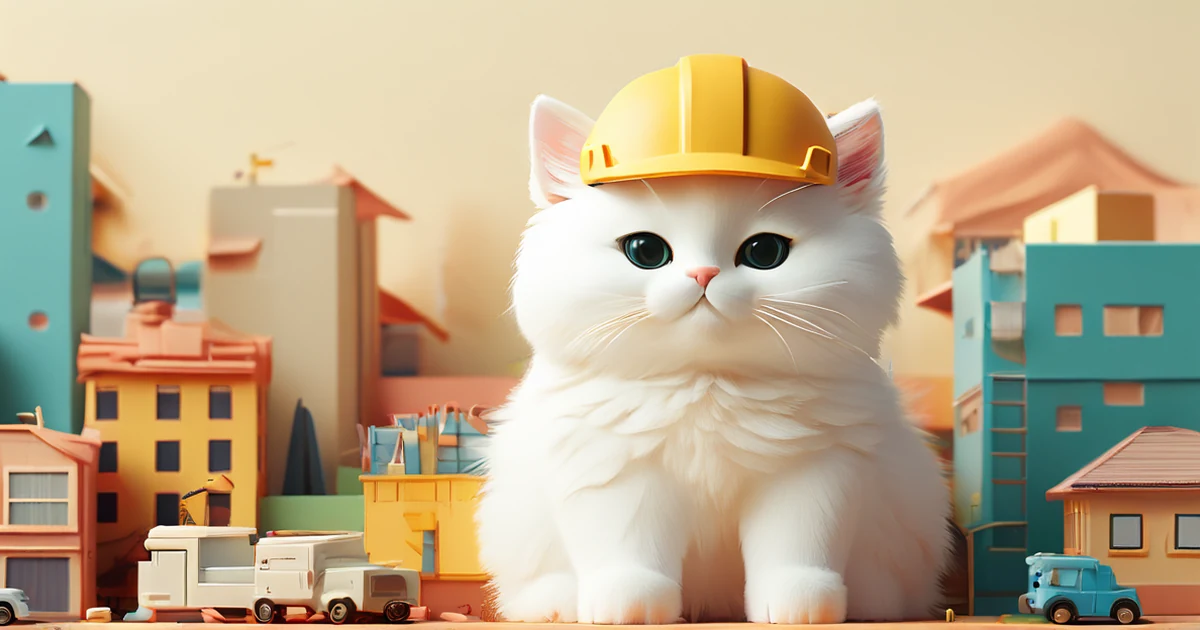
The short answer: cat city builder games hook you with three mechanics — instant feedback, offline earnings, and numbers that never stop rising. Cats aren't the hook; they're the amplifier. The same "tap, +1 coin" loop becomes dramatically more rewarding when it's "tap, the cat got a treat." Understanding the design helps you play smarter — and recognize when the loop is playing you.
The Three Frameworks Every Cat Management Game Uses
Search the genre and nearly everything falls into one of three molds:
- Restaurant type: cats run a café — you seat customers, serve dishes, collect coins, upgrade equipment. Fast loops, short sessions, built for spare minutes. This is what people mean by "cat café games."
- Farm / pond type: plant, raise, harvest, sell, expand. The keyword is cycles — everything grows on a timer, so what you're really planning is a schedule, not your reflexes.
- City builder type: start from empty ground, lay roads, place buildings, watch cat residents move in. This is the "cat city" fantasy at its fullest — the most freedom, and the most long-term planning.
Beneath the skins, all three run the same engine: produce resources → spend resources to expand capacity → produce more resources. The only real difference is loop length: restaurant cycles run in minutes, farms in hours, cities in days. Pick the one that matches how much attention you actually want to give.
The Idle Loop: Why "It Earns While You're Gone" Works So Well
Every idle builder has its magic moment: you close the game, it keeps working, and when you come back the earnings are stacked and waiting. That moment hits two psychological mechanisms at once.
The first is variable reward. In behavioral psychology, rewards delivered on an unpredictable schedule create stronger habits than fixed ones. You never know exactly how much has piled up, so "come take a look" becomes an anticipation loop of its own.
The second is visualized progress. Coin counters, XP bars, level badges — every one of them is a constant message that "things are getting better." Humans respond far more strongly to visible improvement than to static success. The faster the numbers rise, the more you want them to rise faster, and the next upgrade is always one step away. That is the entire machinery behind "just five more minutes."
Practical tip: if you catch yourself opening the game "just to collect" and then playing for half an hour — that's the designed path, not a personal failing. The most effective fix is fixed collection times: lunch break and bedtime, nothing in between.
Three Resource Mistakes New Players Always Make
Once the loop makes sense, most beginner losses come from allocation, not effort:
- Spreading investment evenly. Splitting coins across every building leaves every production line mediocre. Instead, feed one main line to its current cap, then start the next. Returns in these games compound — they multiply, they don't add.
- Ignoring the offline cap. Before upgrading production speed, check the offline earnings limit. If you realistically collect twice a day, maxing the 8-hour output beats stacking per-tap yield every time.
- Hoarding. Sitting on a pile of coins "just in case" is the most common beginner trap. Resources in the wallet appreciate at exactly zero; only converted into capacity do they grow. Unless a big purchase is imminent, coins belong in upgrades.
One related note: merge mechanics often get bundled into management games. If your game has "two cats fuse into a bigger cat," that's a different genre with different rules — our cat merge game guide covers it.
City Builder vs. Farm: Same Cats, Different Decisions
"Cat city games" and "cat farm games" sound interchangeable. They aren't:
- A farm is a schedule. Your core decision is "plant what now, harvest when." Misjudge the timing and you lose a cycle. Best for planners who can log in at consistent times.
- A city is a layout. Your core decision is "what goes on this plot, how do roads connect." Moving a misplaced building costs heavily. Best for players who like spatial structure and long arcs.
There's a hidden difference, too: a city's feedback is slower but lasts longer. A well-planned cat town keeps paying you visually every time you open it, while a farm's satisfaction ends with each harvest. If that appeals to you, our cat city builder runs right in the browser — no download.
Why Cats, Specifically?
One question is worth answering honestly: management games come in every theme — why does the cat version always outperform?
Because cats are perfectly shaped for the core emotion these games sell: the urge to care for something. Round faces, big eyes, soft fur — these features trigger human caretaking instincts directly. You're not upgrading "level-3 warehouse," you're building one more cat bed. Identical numbers, completely different emotional weight.
Collection instinct does the rest. Cat breeds arrive pre-packaged as a collectible list — ginger, ragdoll, siamese — and "every breed living in my city" is a far more motivating long-term goal than "one million coins." Our cat breed neighborhoods use the same principle: one breed per block, and by the time you've wandered through them all, you know them all.
In the end, cats aren't a skin for the idle loop — they're its amplifier. Once you see that clearly, you know whether you're playing the game, or the cats are playing you.
🎮 Play free — no download