

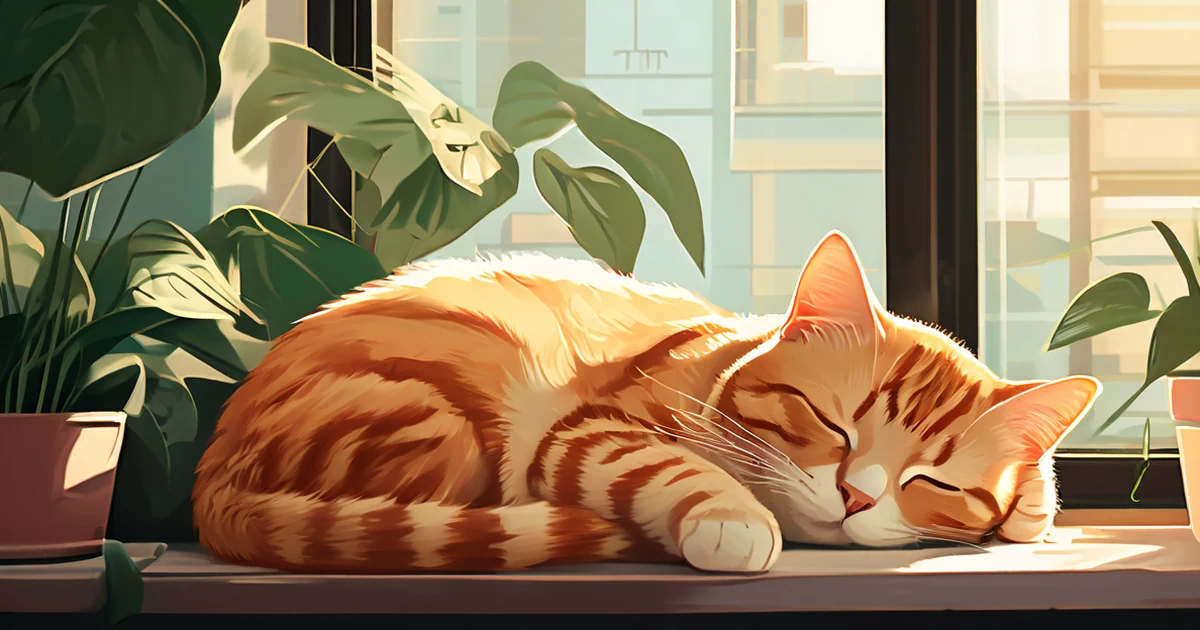
Here's the short answer: indoor cats typically live 12 to 18 years, and well-cared-for cats reaching 20 or beyond are not unusual. Cats that live outdoors year-round, on the other hand, often average only a handful of years. Breed matters, but the single biggest factor in how long a cat lives is the lifestyle you give it. Below, we'll walk through the indoor-versus-outdoor gap, what to expect from specific breeds, and how to convert cat years to human years.
Indoor Cats vs. Outdoor Cats: How Big Is the Gap?
Think of an indoor cat and an outdoor cat as walking two completely different roads through life. Indoor cats are shielded from nearly all of the leading causes of early death: traffic accidents, attacks by dogs or other animals, poisoning, infectious diseases like feline leukemia and FIV that spread through fighting, extreme weather, and cruelty. Common estimates put the average lifespan of outdoor cats at just 2 to 5 years. That number sounds shocking, but an outdoor cat faces a dangerous gamble every single day.
Indoor cats mostly die of something very different: chronic disease. Kidney failure, cancer, and heart disease tend to appear in middle-aged and senior cats. This is the real reason indoor cats live longer on average — not sturdier bodies, but the fact that they're likely to reach the age when chronic illness shows up, with an owner nearby to catch it early through routine vet visits.
So the first answer to "how long do cats live" is simple: keeping your cat indoors is the highest-value single thing you can do to extend its life. If you worry about an indoor cat being bored, don't open the door — enrich the indoors instead. Cat trees, food puzzles, and dedicated daily play sessions go a long way. For play ideas, our guide to using laser pointers safely is a good starting point.
How Long Do British Shorthairs Live?
British Shorthairs generally live about 12 to 15 years, and neutered individuals with good weight management and regular checkups often reach 17 or 18. The breed is sturdy, even-tempered, and well suited to indoor life, but there are two things to watch:
- Weight gain. British Shorthairs love their food and have a slow metabolism, especially after neutering. Obesity raises the risk of diabetes and joint disease, both of which can shorten a cat's life. Scheduled meals and regular weigh-ins beat free feeding.
- Heart disease. Hypertrophic cardiomyopathy (HCM) occurs in the breed at a meaningful rate. Keep an eye on breathing rate and energy levels, and mention the breed risk to your vet during checkups.
Curious what makes this breed tick? Every cat in our breed neighborhood is introduced with its real-life breed traits, British Shorthair included.
How Long Do Chinese Li Hua Cats Live?
The Chinese Li Hua — and, broadly, China's native domestic cats — has a reputation for being remarkably tough. A large gene pool, little inbreeding, and generations of natural adaptation to the local environment give it a robust constitution. Healthy individuals routinely live past 15 years, and 20-year-old cats are not rare.
But "tough" doesn't mean "no care needed." The biggest threats to a Li Hua's lifespan are lifestyle-related: free-roaming accidents, a diet heavy in salty human food that burdens the kidneys, and medical problems discovered too late because nobody took the cat for checkups. A neutered, indoor Li Hua with regular vet visits has every chance of ranking near the top of the lifespan table. If you're choosing your first cat, that hardiness is worth taking seriously — our beginner-friendly breed list can help you compare options.
Scottish Folds: It's Not How Long, It's How Well
Scottish Fold cats don't have unusually short lives — 12 to 15 years is typical — but lifespan is the wrong question to ask about this breed. The quality of those years is the real issue. The signature folded ears come from a gene affecting cartilage development. Cats inheriting two copies of the defective gene can develop progressive joint and bone pain (osteochondrodysplasia) that has no cure.
In practice, a Scottish Fold's lifespan may look similar to any other cat's, but it may spend those years managing chronic pain. If you're considering one, choose a responsible breeder, learn about the parents' genetics, and watch for warning signs early — reluctance to jump, stiff movement. If you already share your home with a Fold, regular orthopedic checks and strict weight control are basic care. Health and daily comfort matter far more than any certificate.
Cat Years to Human Years: The Practical Conversion
The old "multiply by seven" rule is popular and wildly inaccurate, because cats develop quickly at first and slowly after. The conversion most commonly used today looks like this:
- A 1-year-old cat ≈ a 15-year-old human. The first year takes a kitten from birth to sexual maturity — the equivalent of growing from infancy to the teenage years.
- A 2-year-old cat ≈ a 24-year-old human. The second year adds about 9, and by then your cat is a young adult.
- After age 2, add about 4 human years per cat year. A 6-year-old cat is roughly 40 in human terms, a 10-year-old around 56, and a 15-year-old around 76.
The conversion isn't trivia — it's a scheduling tool. For healthy adults between 2 and 7, a yearly checkup is usually fine. From age 10 onward, aim for two vet visits a year, focused on kidneys, thyroid, blood pressure, and teeth. Those four areas cause most problems in senior cats, and catching trouble a few months early is often worth years of lifespan.
So, how long do cats live? The data gives you a range, and where your cat lands inside that range depends mostly on you: keep it indoors, manage its weight, keep up with checkups, and see a vet promptly when something seems off. Do those four things and your cat will likely keep you company for fifteen or even twenty years. Owning a cat is a promise measured in decades — and that's exactly what makes it worth keeping.
Want a lighter way to think about a cat's life stages? In CatPawCity, twenty cat breeds each have their own neighborhood — play CatPawCity free in your browser and find where your cat's breed lives.🎮 Play free — no download