

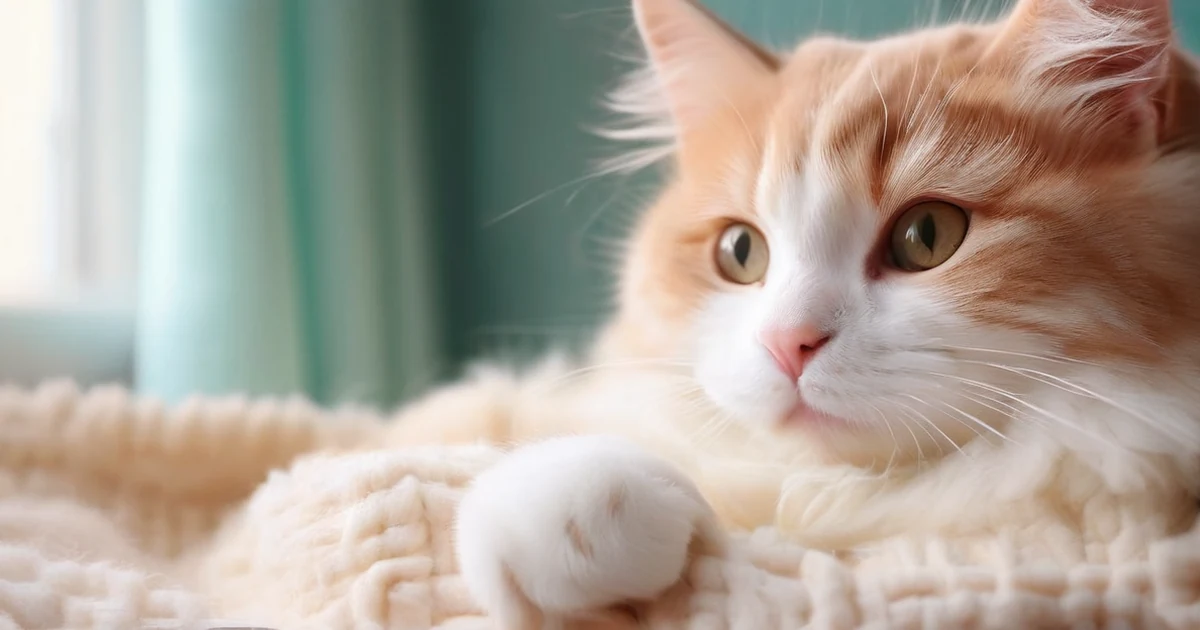
The short answer: kneading — that rhythmic, alternating paw-pressing cats do on soft things — is the adult version of the motion kittens use while nursing. Kittens push their paws around the mother's mammary glands to speed up milk flow, and the motion gets filed away together with everything warm and safe about that period of life. When your adult cat does it on a blanket or your lap, it's replaying comfort on purpose. In the vast majority of cases, kneading is a good sign: your cat feels safe, relaxed, and trusting right where it is.
Why Do Cats Knead? Four Working Theories
None of these exclude the others — most behaviorists think all four overlap:
- Leftover nursing behavior. The pressing helped milk flow; the motion is welded to the memory of being warm, full, and held. Adult cats replay it on soft surfaces to summon the feeling.
- Neoteny. Free-living cats that grow up away from humans mostly drop these kitten behaviors as adults. House cats keep meowing, purring, and kneading for their entire lives — not immaturity, but thousands of years of adaptation to living in a permanent "family group" with people.
- Scent marking. Cats have scent glands in their paw pads. Every press stamps a little "this is mine" onto the blanket, the couch, and you. You see a cat massaging a blanket; the cat is signing a lease.
- Nest-building. Wild ancestors tamped down grass to flatten a soft, safe sleeping spot. Plenty of house cats knead a cushion and then flop onto it in exactly that order.
So what does kneading mean? Relaxation, trust, and a bit of territory-claiming. One caveat worth stating plainly: a cat that never kneads is not an unhappy cat. Individual variation is enormous, and a low kneading frequency has never been a welfare signal on its own.
Why Do Cats Knead and Suckle Blankets (or You)?
When the kneading slides into suckling — mouthing the blanket corner, your sleeve, occasionally an earlobe — the cat is performing the whole nursing script, not just the paw part. The most common background factor is early weaning. Under natural conditions kittens aren't fully weaned until roughly 8 to 12 weeks; kittens separated from the mother earlier are noticeably more likely to treat soft objects (or a favorite human) as a surrogate mom in adulthood.
By itself this is harmless self-soothing, the feline equivalent of a toddler's comfort blanket — many cats suckle themselves straight to sleep. The one escalation worth watching is suckling turning into swallowing. A minority of cats progress to eating fabric, wool, or plastic, which is pica territory with real intestinal-blockage risk. If the blanket starts growing bite marks and missing corners, replace it with something sturdier and mention it to your vet.
If the suckling target is you and you're not enjoying it: don't yank your hand away mid-session — that lands as punishment and poisons the trust the kneading was expressing. Put a thick fleece blanket on your lap and redirect the mouth to the fabric instead of skin. Most cats make the swap within a few sessions.
The Purring, Drooling, Half-Closed Eyes Package
These tend to arrive together: eyes narrowed to slits, paws alternating, a rumbling purr (some owners describe it as a low "cooing" sound), and a thread of drool at the corner of the mouth. That's the full deep-relaxation configuration. Purring shows up both when content and when self-soothing; the nursing simulation stimulates salivation, which is why the drool is normal and stops the moment the session ends.
Quick tip: kneading + purring + half-closed eyes = the cat is about as happy as it gets. Don't interrupt — and hold the phone back a bit, because a lot of "biscuit sessions" end the moment a camera looms over them.
Why Does My Cat Knead and Then Bite Me?
This usually isn't a mood flip. Two things happen in sequence: mouthing and biting are part of the nursing script itself — the kitten grips the mother while nursing — and after a few minutes of stimulation, arousal tips over from cuddly into playful, and your hand gets promoted to pretend prey. The pawing speeds up, the pupils widen, the bite follows.
The fix is mechanical rather than emotional: withdraw the hand before the bite lands and redirect the energy into a wand toy or something legal to bite. Never slap or push the cat away. It won't learn a lesson from the punishment; it will learn "kneading on this person ends in trouble," and you'll lose the behavior — and a little of the trust — permanently.
Is Kneading Good or Bad? When to Actually Pay Attention
Verdict: good for the cat, a sweet kind of trouble for you — the trouble being claws. Toes spread and claws hook into fabric with every press, and a hooked thigh under denim is memorable. Three counters:
- Keep a thick blanket between the paws and your legs, always — let the claws find wool instead of skin.
- Trim the nail tips regularly — the clear hook at the end only, never the pink quick.
- Place a dedicated "kneading blanket" near its favorite spot and let it claim one specific object rather than the whole sofa.
There are only two changes that genuinely warrant attention. First, a sudden large shift in frequency — stressed cats sometimes knead much more as self-soothing, while pain quietly reduces all physical activity; if a lasting change comes with other odd signs, see a vet. Second, suckling upgrading into swallowing fabric, the pica risk mentioned above. Anything else: let it knead.
Heavy kneaders usually have high interaction needs too — the moment a session ends is a great window for a play round. Open the free cat toy game and let it swat a bug on screen, read the full laser pointer play guide, or browse the cat breed neighborhoods to see how differently each breed expresses its affection.
🎮 Play free — no download