

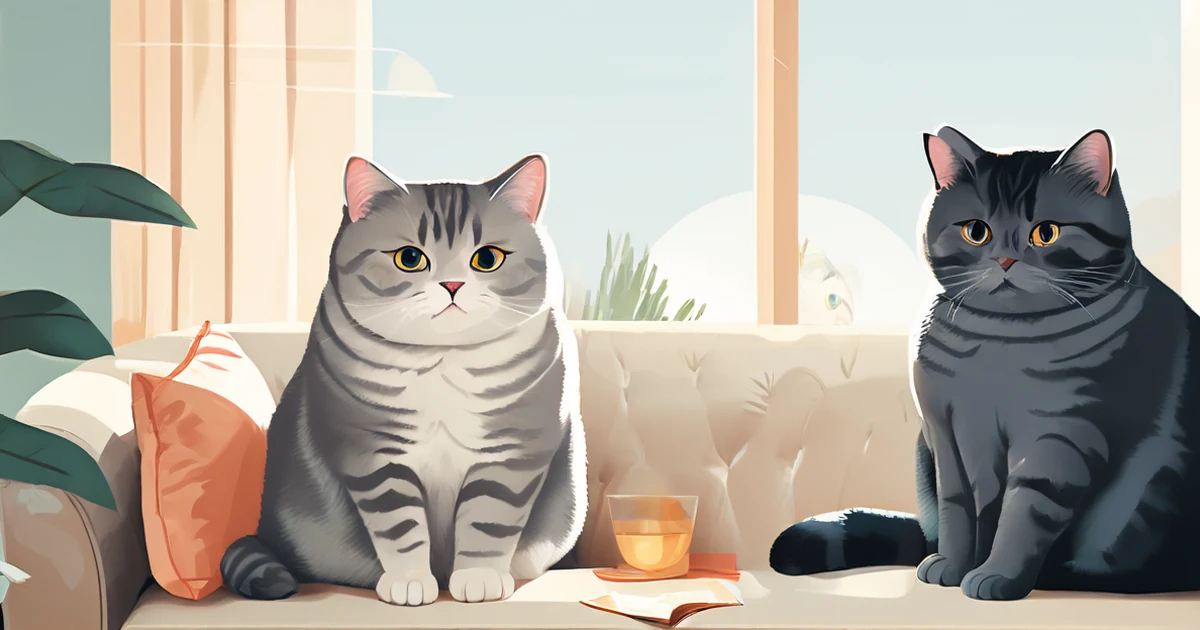
The short answer: the biggest differences between a British Shorthair and an American Shorthair are face shape and personality. The British is round-faced, heavy-boned and famously calm — a quiet couch companion. The American is leaner, muscular and noticeably more playful — an athletic playmate. And those silvery "shaded" cats all over social media? Almost always British Shorthairs. Here's the full comparison.
British vs American Shorthair at a Glance
Comparing photos of the two breeds? Just check four things: the face, the body, the coat texture, and the pattern.
| Feature | British Shorthair | American Shorthair |
|---|---|---|
| Face | Very round and wide, full cheeks, teddy-bear look | More oval, slightly longer muzzle, less exaggerated cheeks |
| Body | Cobby and sturdy, thick bones; adult males often 11–15 lbs | Lean and athletic, generally a bit lighter and longer-limbed |
| Coat | Extremely dense and plush, like velvet — stands off the body in winter | Short, close-lying and smooth |
| Signature color | Blue-grey ("British Blue"), blue-and-white, golden and silver shaded | Silver classic tabby with bold dark swirls or mackerel stripes |
| Eyes & ears | Wide-set ears, big round eyes | Slightly almond-shaped eyes with an upward tilt |
Quick rule of thumb: round face plus chunky legs means British; a striped, athletic build means American. Check the width of the face first, then look for tabby stripes. If you're browsing photos because you can't identify a cat at all, our cat breed neighborhoods page shows the visual traits of many popular breeds side by side.
Personality: Quiet Companion vs Playful Hunter
Neither breed is fragile or high-strung, but their day-to-day styles couldn't be more different.
- British Shorthair: spends most of the day napping or watching birds from a windowsill. Vocal only when it matters, tolerant of being alone, and affectionate in a low-key way — it prefers sitting next to you over being carried around. That's why the breed is such a common recommendation for people who work full days.
- American Shorthair: descended from hard-working ship and farm cats, and it still carries that energy. Wand toys, crinkle balls, cardboard boxes — everything is a game. It actively seeks interaction and will follow you around far more often than a British will.
If you want a calm roommate that won't knock things off shelves during your video calls, go British. If you want a cat that initiates play sessions and engages with you for half an hour at a time, go American. Curious how quiet the calmest breeds really are? Our guide to cat breeds that don't shed much also ranks several breeds by temperament and grooming effort.
Which One Costs More?
This is one of the most-searched questions about the two breeds, and the honest answer is: it depends on color and quality, not the breed label.
- British Shorthair prices have a very wide range. Common blue kittens sit at the affordable end, while rare colors like golden shaded and silver shaded command a significant premium.
- American Shorthair pricing is more concentrated: silver classic tabbies are the mainstream, and the gap between pet-quality and show-quality kittens is usually smaller.
- On the same budget, you'll typically find a well-bred American more easily; for the classic "chunky blue teddy cat" on a tighter budget, a British Blue is the usual pick.
Prices vary a lot by region and breeder, so treat any figure you see online as a rough range. What matters more: the kitten should be vaccinated, dewormed and from parents screened for known genetic conditions. A cheap cat from an unknown source often turns into expensive vet bills.
The "Silver Shaded" Question
Answer: the silver shaded cats you see online are British Shorthairs.
"Shaded" describes a gradual color transition along each hair — dark at the tip, fading to near-white at the root — which gives the coat a misty, silvery glow with no visible stripes. The American Shorthair's iconic look, by contrast, is a silver tabby with crisp black stripes over a pale background. So the fastest way to tell them apart is stripes: a stripeless silvery coat points to a British Shorthair; clearly striped silver points to an American Shorthair.
Golden shaded and silver-point coats also belong almost exclusively to the British side. Color, by the way, says nothing about personality — a silver shaded British and a blue British behave the same.
Which Is Easier to Live With?
Both breeds are healthy, robust and beginner-friendly. Their care needs just point in different directions:
- British Shorthair: naturally sedentary, so the classic problem is weight gain from overfeeding plus too little movement — measure meals and schedule a few minutes of daily play. Seasonal shedding is heavy; regular brushing keeps it manageable.
- American Shorthair: higher activity and better metabolism mean it's less prone to obesity, but that energy needs an outlet. Without daily play it will invent entertainment — unrolling toilet paper counts. Two short play sessions a day usually do the trick.
Busy owners and apartment dwellers tend to be happier with a British; families with kids, or anyone who wants an interactive cat, will love an American. Whichever you choose, play is what makes the difference — try a round of our free cat merge game, or test whether your future kitten goes crazy for on-screen bugs with these free cat toy games.
Quick tip: for either breed, spay/neuter at the age your vet recommends and book a yearly check-up — weight and urinary health matter most in adult shorthairs.
To sum up: the British Shorthair is a round-faced, quiet plush pillow; the American Shorthair is a lean, playful workout buddy. Pick the face you love, then the personality that fits your routine — you can't go wrong with either.
🎮 Play free — no download