

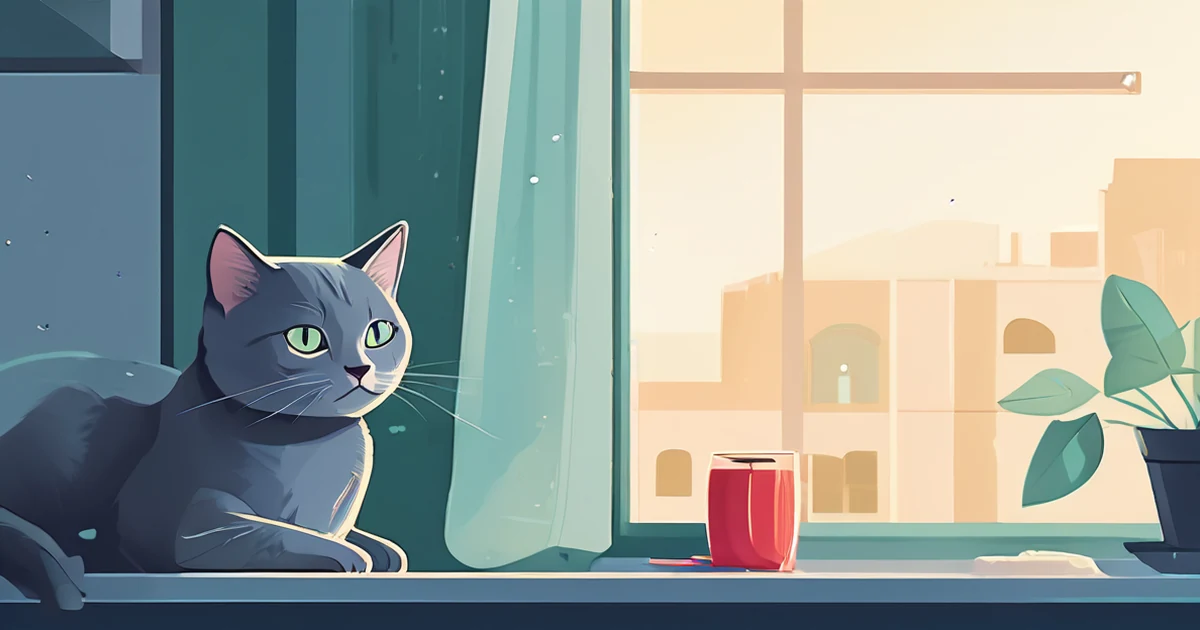
Straight to the point: for busy owners, the best breed is one that can happily run its own day — independent temperament, a short easy-care coat, and robust health. Six breeds check all three boxes: British Shorthair, American Shorthair, Russian Blue, Chinese Li Hua, Scottish Fold and Abyssinian. Here they are, grouped by how much time you can actually give them each day.
The 6 Low-Maintenance Breeds, One by One
- British Shorthair — the gold standard of "self-sufficient". Calm, undemanding, perfectly happy to nap beside you while you work. A weekly brush covers grooming. British Shorthair profile →
- Russian Blue — quiet, fastidiously clean and a light shedder. Tolerates alone time better than most; shy around guests, which means zero chaos when friends visit. Russian Blue profile →
- Chinese Li Hua — a natural breed with survival-tested genetics: hardy, unfussy about food and rarely sick. If you can adopt one, this is the lowest-cost, lowest-drama cat on the list. Li Hua profile →
- American Shorthair — sturdy, cheerful and a bit more playful than the British. Great "some interaction, no clinginess" middle ground. American Shorthair profile →
- Scottish Fold — gentle and quietly affectionate. One caveat: the folded-ear gene can affect cartilage, so buy only from ethical breeders with health-checked parents, and watch for reluctance to jump or stiff movement. Scottish Fold profile →
- Abyssinian — a near-zero-maintenance coat on a very active cat. It needs 20 minutes of play a day rather than grooming time — the strongest "companion" feel of the six. Abyssinian profile →
Matching the Breed to Your Schedule (and Which to Skip)
- Under 10 minutes a day? British Shorthair, Russian Blue or Li Hua. All three treat your absence as nap time.
- 20–30 minutes a day? American Shorthair, Scottish Fold or Abyssinian. They repay play time with real personality.
- Skip Persians and other longhairs — stunning, but daily brushing is non-negotiable or mats appear within days. If shedding is the worry, see our low-shed breeds guide.
- Skip Siamese — vocal, attention-hungry and anxious alone, which is the exact opposite of low maintenance.
- Skip Maine Coons if budget is tight — wonderful cats, but food, litter and space costs all scale with size.
The Busy Owner's Starter Kit
- Automatic feeder + water fountain — handles daytime meals; the single best investment.
- Rotating toys — an under-stimulated cat gets bored and chubby. Leave self-play toys (food puzzles, spring toys) out, then when you're home, run a round of Cat Toy Mouse on any phone or tablet — it's built exactly for those after-work sessions.
- Two scratching boards — one by the sofa, one by the bed, and your furniture stays safe.
- A pet camera (optional) — a midday peek is good for both of you.
What "Low-Maintenance" Does Not Mean — and What It Saves
The phrase gets misused a lot, so it is worth being concrete. Low-maintenance means high tolerance for your absence and a forgiving coat — not a cat that needs nothing. The realistic daily floor for any of the six breeds above is roughly ten to fifteen minutes: scoop the tray, refresh water, and one short play session. Grooming adds five minutes twice a week for a shorthair, and nothing at all for the Li Hua.
Three things it does not rule out. Veterinary care still arrives on schedule and on short notice — a dental, a vaccine booster, an unplanned limp. Litter duty is daily, not weekly, whatever the breed. And every cat needs some social contact; the independent breeds simply tolerate the gaps between sessions better than a Siamese would. If you travel for a week at a time, "low-maintenance" buys you a cat that copes with a daily sitter — not a cat you can leave.
What it does save you is real money, through three mechanisms:
- Short coats do not need a groomer. Professional grooming every six weeks is a genuine recurring line item for longhairs. A shorthair needs a brush you already own.
- Robust genetics mean fewer surprises. The naturally developed breeds on this list — the Li Hua especially — were shaped by survival rather than show standards, and tend to reach old age without the breed-specific screening that Persians and Maine Coons require.
- Standard size keeps every consumable standard. Food, litter and parasite prevention all price by body weight. A five-kilo cat is simply cheaper to run than a Maine Coon, permanently.
None of that makes cat ownership cheap. The emergency fund still matters more than the monthly total — a single blocked bladder outweighs a year of ordinary care. For the full breakdown, see what a cat actually costs per month.
The One-Sentence Summary
Low maintenance doesn't mean no maintenance: 10 minutes of play, a clean litter box and an annual vet visit are still on you. Want to browse every breed by temperament first? Walk the Breed Districts — and if you're also a first-time owner, pair this with our 8 best breeds for beginners.
🎮 Play free — no download