

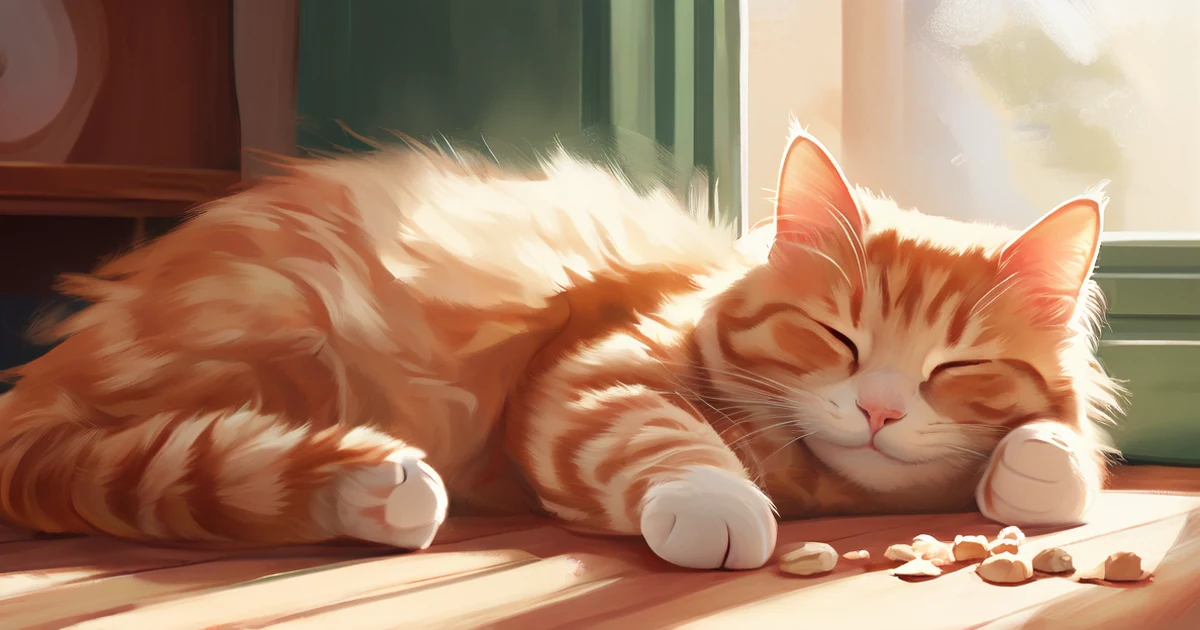
The short answer: orange cats are not genetically predisposed to getting fat. The "chubby orange cat" meme — huge on TikTok under #OrangeCatBehavior and everywhere else — is mostly the combined effect of sex ratios, neutering, indoor living, and a feeding culture that treats a round ginger cat as a comedy goldmine. There is an indirect genetic connection, though: the orange color gene is linked to sex, roughly 80% of orange cats are male, and neutered males genuinely gain weight more easily.
Is "all orange cats are fat" actually true?
No reliable study has ever linked orange coat color to obesity. The O gene that produces orange fur controls pigment, nothing else — it has no known effect on appetite, metabolism, or fat storage. What makes the meme feel true is a mix of optics and statistics:
- Survivorship bias. A chubby orange cat napping on a keyboard is inherently more shareable than a lean one, so your feed is full of the round ones. Normal-weight ginger cats barely go viral.
- The male skew. The orange gene sits on the X chromosome. A male (XY) needs just one copy to be orange; a female (XX) needs two. That's why about 80% of orange tabbies are male. Males are naturally bigger, and neutered male cats are the single most obesity-prone group in the feline world. "Orange cats are fat" is partly "orange cats are mostly neutered males, and neutered males get fat."
Why do ginger cats get fat so easily? The real reasons
If the color gene is innocent, the usual suspects are all lifestyle-related — and they apply to any cat, orange or not:
- Neutering. A neutered cat's calorie requirement drops by roughly 20–30%, but most owners keep feeding the same portions. That surplus accumulates quietly, month after month.
- Indoor life. House cats burn far less energy than their ancestors ever did. A food bowl available all day plus a sedentary routine equals predictable weight gain.
- The internet reward loop. Fat orange cats are beloved pop-culture icons — Garfield is a lazy orange tabby — so owners shower them with treats, and the photos get shared, which reinforces the stereotype. Ginger cats are, in effect, a high-risk group for overfeeding.
- Free feeding. Leaving kibble out all day removes the only natural weight-control mechanism a cat has: the rhythm of hunting and meals.
One fun aside: a truly solid orange cat doesn't exist. Every orange cat carries tabby markings — the same gene that mutes the rest of the coat's patterning doesn't fully suppress stripes on orange fur. Look closely at your cat's belly and you'll find faint rings.
Does coat color affect behavior? The "orange cat" personality question
The #OrangeCatBehavior trend doesn't just joke about weight — it portrays ginger cats as chaotic, affectionate, and slightly dim. What does the evidence say? Honestly, very little. Large surveys of owner-reported behavior suggest that perceived personality differences by color are weak and may partly reflect owner expectations. One consistent finding: people rate orange cats as friendlier and more approachable than, say, black or tortoiseshell cats — but that's human perception, not feline genetics. There's no established mechanism by which a pigment gene rewires temperament.
That said, the male skew matters here too. Male cats, on average, tend to be reported as more social and bold than females, so a population that's 80% male will look like it shares a personality. The "orange cat behavior" is, at least in part, "young neutered male cat behavior."
How to keep a ginger cat at a healthy weight
Vets grade body condition on a 9-point scale, with 5 as ideal: you can feel the ribs under a thin fat layer, see a waist from above, and a slight abdominal tuck from the side. If you can't feel ribs or see a waist, your cat is overweight — and excess weight raises the risk of diabetes, joint problems, and urinary disease. Four habits do most of the work:
- Measured meals. Ditch the always-full bowl. Calculate daily calories for your cat's target weight, split into two or three meals, and for a neutered cat start at the lower end of the food label's range.
- Treats under 10%. Most overfeeding doesn't come from dinner — it comes from the steady drip of treats and lickable snacks.
- Two play sessions a day. Ten to fifteen minutes of chasing twice daily is enough to move the needle. Wand toys, laser pointers, or a touchscreen cat toy game and a laser-dot mini game all work — especially for the ginger who ignores you after five minutes.
- Monthly weigh-ins. Same day, same scale, once a month. Safe weight loss is slow — under 1–2% of body weight per week. Rapid loss in cats is genuinely dangerous.
If you want to dig into the coat pattern itself, we have a orange tabby breed page and an orange-and-white cat page. And if you'd like more on feline play instincts, our guide on why cats chase laser pointers pairs nicely with the weight-control routine above.
To sum up: your orange cat isn't fat because of genetics — it's fat because the bowl is always full. Portion control plus daily play, and your ginger can be the one orange cat that breaks the meme.
🎮 Play free — no download