

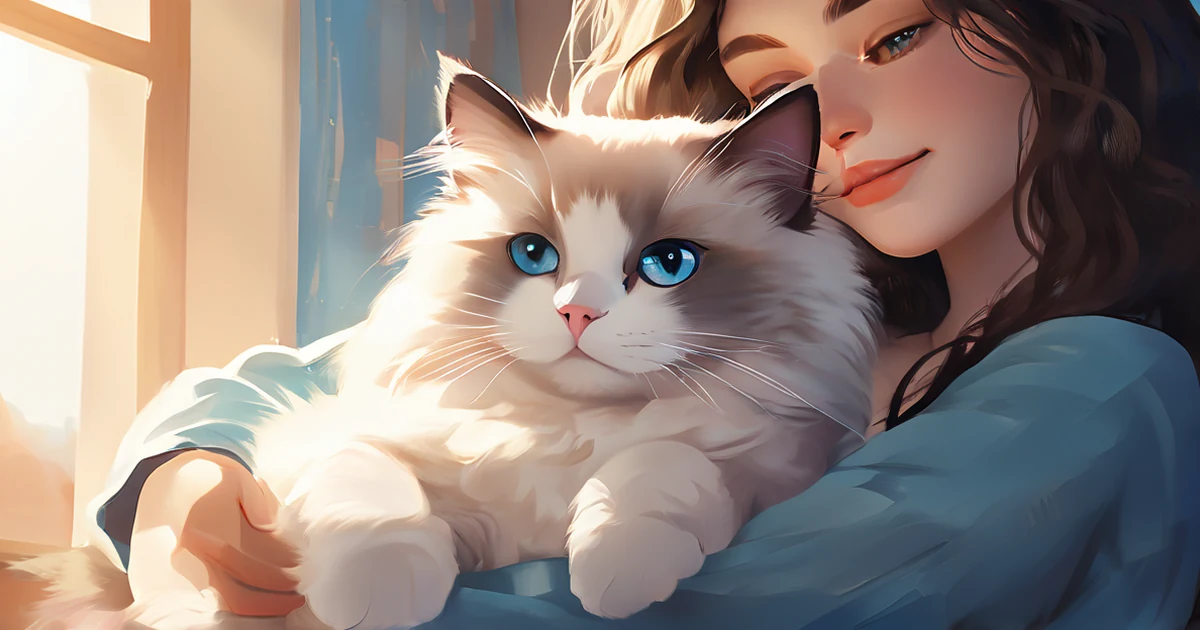
Bottom line first: the Ragdoll is one of the gentlest cats you can bring home. It is bred to be people-first, it goes limp and relaxed when you pick it up — that is literally where the name comes from — and it almost never answers rough play with claws. But "gentle" is not the same as "easy." A sensitive stomach, a semi-long coat that sheds seriously, and a genuine need for your company are the parts of the deal that catch first-time Ragdoll owners off guard.
What a Ragdoll's Temperament Is Actually Like
A well-bred Ragdoll is calm, trusting and quietly attentive. It tends to follow you from room to room rather than demand attention with noise, greets visitors instead of hiding, and tolerates being handled for far longer than the average cat. Many owners describe the breed as puppy-like: it learns simple games such as fetching a small toy, and it clearly prefers being where the people are over perching alone on the highest shelf.
The flip side of that trusting nature is vulnerability. Ragdolls are poor judges of danger. They do not read traffic well, they are not streetwise around dogs or territorial strays, and their instinct when something scares them is usually to freeze rather than flee. This is why every serious Ragdoll source gives the same advice: this is an indoor-only cat. A catio, a harness, or a stroller for supervised fresh air — never free-roaming.
The Pros of Living With a Ragdoll
- Exceptionally tolerant handling. Children who have learned how to be gentle can usually interact with a Ragdoll safely, because the cat does not lash out when held.
- Quiet company. Most Ragdolls have soft voices and use them sparingly. You get companionship without a running commentary.
- Low conflict with other pets. Their mild, non-confrontational style tends to fit well into multi-cat households.
- Trainable in small ways. Fetch, simple routines, coming when called — the dog-like reputation is earned.
The Cons Nobody Mentions Until After Adoption
- Separation sensitivity. A Ragdoll bonds hard. Long workdays plus frequent travel is the single worst fit for this breed; some cats develop stress behaviors when left alone for most of every day.
- The famous fragile stomach. Ragdolls are notorious for soft stools when food changes too fast or treats get generous. Food transitions need to be stretched over one to two weeks, treats kept small, and human food ruled out entirely.
- Real shedding and real grooming. A semi-long coat means a brush two to three times a week, more in spring and fall. Skip it and you will find mats behind the ears and along the belly.
- Size. This is a big cat. Males commonly weigh twelve to twenty pounds, and everything from carriers to litter boxes to your lap needs to be sized accordingly.
- A health question to ask, not fear. The breed carries a genetic risk of hypertrophic cardiomyopathy (HCM), a heart condition reputable breeders screen their breeding cats for. Ask to see the parents' screening status before you commit; a breeder who bristles at the question has answered it.
Are Ragdolls Good for First-Time Owners?
On temperament, yes — arguably one of the best beginner cats there is. A Ragdoll rarely bites or scratches out of irritation, forgives clumsy handling, and does not punish mistakes the way a more sensitive breed will. If your goal is a friendly, handleable cat, the breed is almost a cheat code.
The honest answer has an asterisk, though. A beginner Ragdoll owner also has to be disciplined about three things: gradual food changes, a regular grooming habit, and enough daily presence. If your household is calm, someone is home most of the day, and you can keep a feeding routine stable, the breed will likely feel effortless. If you travel constantly or want a fully independent cat, compare it with more self-sufficient breeds first — our roundup of the best cat breeds for first-time owners is a good starting point, and our piece on how long cats live covers the long-term health planning a large breed needs.
Before You Adopt: a Short Checklist
- A stable staple food, plus enough of the old food for a slow two-week transition.
- A proper long-hair comb, introduced from kittenhood.
- Screened windows and a fully indoor plan.
- An honest look at your weekly schedule — the Ragdoll needs you, not just food and a clean box.
- A budget conversation. Ragdolls are a premium breed to acquire, and semi-long coats cost more to maintain than short ones; our realistic monthly cat cost breakdown will help you size that up.
So — what is a Ragdoll's personality like? Gentle, devoted and forgiving, with a soft voice and a soft body. The catch is a delicate gut, a shedding coat and a heart that expects you home. If you want to meet one first, visit the Ragdoll breed page in CatPawCity and see where it lives on our streets, then unwind with a round of the cat toy game while you decide.
🎮 Play free — no download