

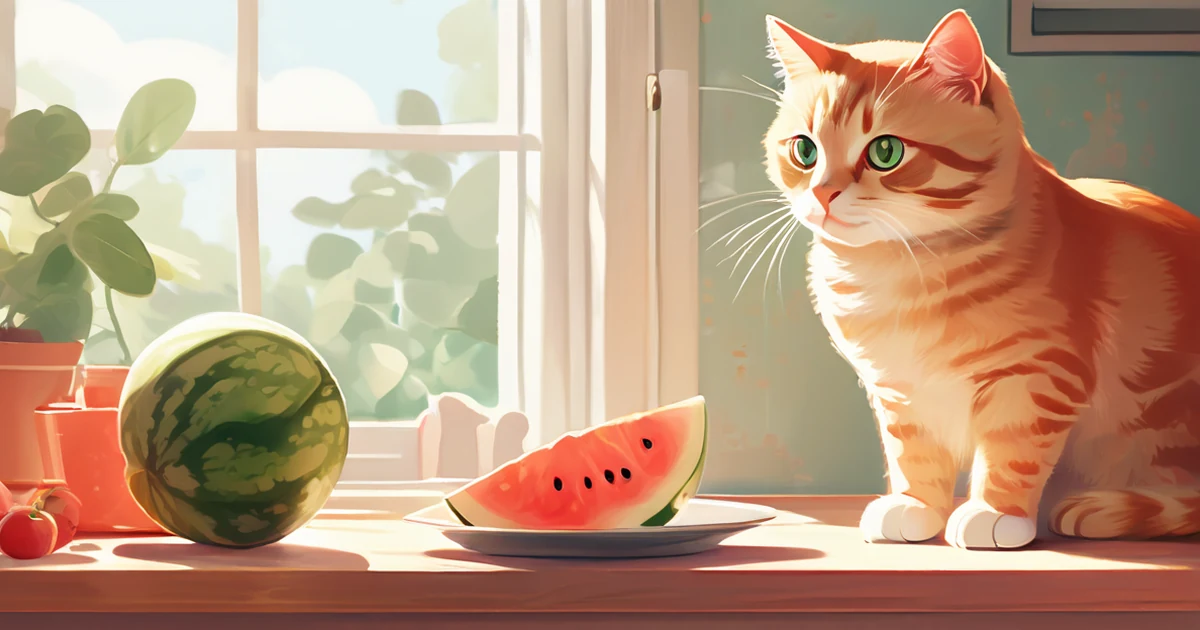
Cats can eat a short list of fruits: watermelon, cantaloupe, blueberries, strawberries and peeled apple, cut into pieces no bigger than a thumbnail. They should never eat grapes or raisins, citrus peel, or avocado. None of it is necessary — fruit supplies nothing a cat cannot get from a complete diet, so treat it as a garnish capped at roughly ten percent of daily calories, and most cats are perfectly happy with none.
The Short Answer: A Few Fruits Are Safe, None Are Needed
Three questions decide whether a fruit is safe: is it known to be toxic, how much sugar does it carry, and how hard is it to digest. That sorts the produce aisle into three groups.
- Fine in small amounts — watermelon, cantaloupe, honeydew, apple flesh, pear, blueberries, strawberries, banana, mango, kiwi, pineapple.
- Only after prep — apple and pear must be cored and deseeded, persimmon peeled and pitted, pineapple cut small because its bromelain stings tender mouths.
- Never — grapes, raisins, avocado, any citrus fruit or peel, the pits of cherries, plums and peaches, and the green parts of unripe tomatoes.
Cats are obligate carnivores: short acidic gut, no dietary requirement for plant matter. Fruit is a flavour experience, not nutrition, which is why it must stay small. A cat filling up on melon is a cat eating less of the food that actually keeps it well.
Safe Fruits and Realistic Serving Sizes
Vets generally advise that all treats stay under ten percent of daily calories. For a ten-pound indoor cat eating about 200 calories a day, that is a budget of roughly 20 — and a single one-inch cube of watermelon already takes a fair slice of it.
- Watermelon — one or two half-inch cubes, seeds and rind removed. The rind is not toxic but is tough, fibrous and often waxed; the seeds are a choking risk.
- Cantaloupe and honeydew — one half-inch cube. It is the aroma that gets a cat's attention, not the sugar.
- Blueberries — one or two, mashed for kittens or greedy eaters.
- Strawberries — a quarter of a berry, hull removed, washed well.
- Apple — a few cubes of flesh only. Apple seeds contain amygdalin, which releases cyanide when crushed; a couple will not harm a cat, but there is no reason to test it.
- Banana — a slice the size of a fingernail, once or twice a week at most. It is the sugariest item on the safe list.
Serve fruit at room temperature. Straight from the fridge it is a common trigger for vomiting and loose stool, and the cold dulls the smell that made it interesting in the first place.
Why Cats Can't Taste Sweetness
Every cat owner has watched a cat ignore cake and then beg for melon, and assumed the cat loves sweets. It does not. The gene for one half of the sweet-taste receptor, Tas1r2, is inactive in cats — the same loss appears in lions and tigers — so sweetness as a sensation is largely missing from their experience. What a cat responds to is smell, water content, fat and texture.
Two consequences follow. A cat begging for watermelon is not craving sugar and will not be satisfied by a sweeter fruit; it wants the juice and the smell. And fruit is a poor way to top up hydration: cats take most of their water from food, which is an argument for wet food and a wide bowl of fresh water rather than melon cubes.
If your cat ignores fruit entirely, that is the normal response, not fussiness. Interest, when it appears, tracks smell and texture — which is why a room-temperature piece gets a sniff and a chilled one gets nothing at all.
Fruits to Keep Away From Your Cat
- Grapes and raisins — linked to acute kidney injury in dogs, with cases reported in cats too. The toxic compound has never been identified, so there is no established safe dose: a single raisin warrants a call to a vet or poison control. Raisins are the bigger risk in practice, because drying concentrates whatever the offender is, and cats readily steal them from baking supplies.
- Avocado — skin, pit and leaves contain persin. Cats are more tolerant than birds or livestock, but vomiting and diarrhoea are still reported, and the pit is an obstruction waiting to happen.
- Citrus — peel and oils contain d-limonene and linalool, which cats metabolise poorly because of limited glucuronidation in the liver. A cat that licks orange peel may drool, vomit, wobble or become light-sensitive. A little flesh is unlikely to hurt; the peel is not worth it.
- Stone fruit pits — cherry, plum and peach pits contain cyanogenic glycosides and are exactly the size to lodge in a cat's small intestine.
- Persimmon seeds and unripe tomato — seeds block the gut; the green parts of tomatoes contain solanine.
One crossover worth remembering while chopping: onions, garlic, leeks and chives are far more dangerous than anything on this list. They damage red blood cells and cause anaemic collapse, and cats are more sensitive to them than dogs.
If Your Cat Ate Something on the No List
Stay calm, and gather three facts before calling anyone: what it ate, roughly how much, and when. Those answers decide the treatment window.
- Call your vet or a pet poison line. In the US the ASPCA Animal Poison Control Center runs a 24-hour line; in the UK, Animal PoisonLine does the same job. Have the packaging in hand.
- Do not induce vomiting yourself. Cats vomit less reliably than dogs, aspiration into the lungs is a real risk, and caustics do more damage on the way back up.
- Watch for warning signs for 24 to 48 hours: repeated vomiting, drooling, hiding, refusing food, tremors, or a cat that stops producing urine. After grape ingestion, kidney values can look normal for a day or two before they crash.
Most fruit incidents are small — a lick of melon juice, a nibble of apple. Keep the treat budget honest and grapes out of reach and fruit stays a harmless summer ritual. If your cat is already a champion beggar, redirect it early: a cat that learns to swipe at your hand for food tends to keep biting when overstimulated, and a few minutes of touch-screen cat toy play drains far more of that energy than a cube of watermelon. For what it actually costs to feed a cat well, see the real monthly cost of owning a cat.
🎮 Play free — no download