

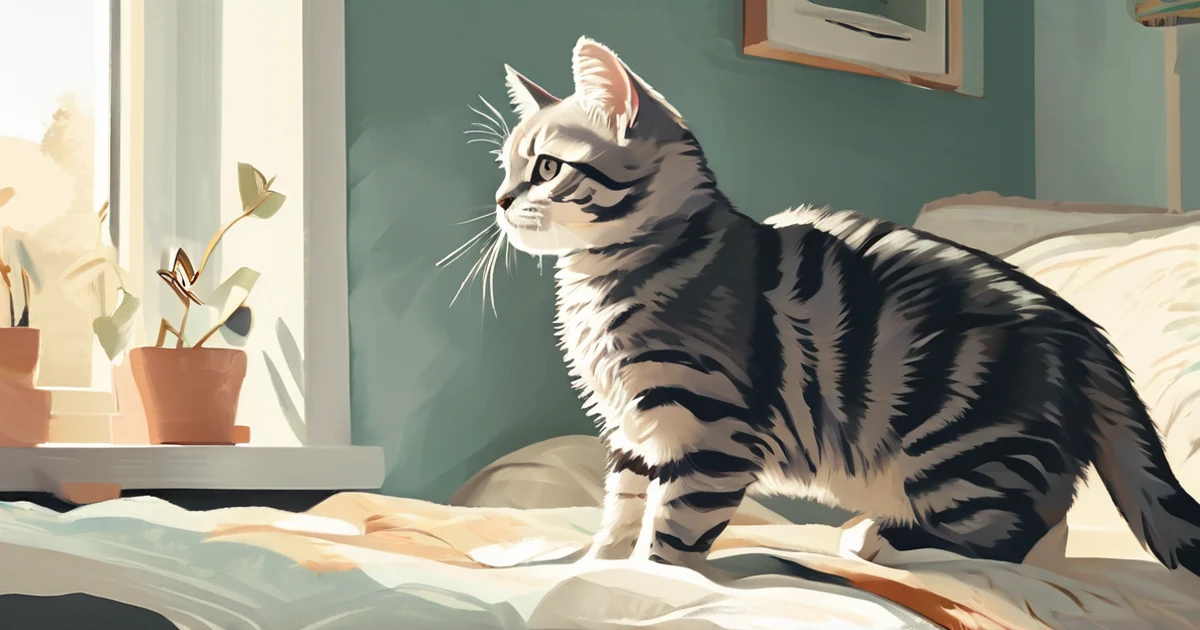
If your cat is shredding the armrest, the sofa is not the problem and neither is the cat's attitude. Cats scratch where the surface grips, where the furniture holds still, and where the spot sits on a route they already patrol — and an upholstered arm at the edge of the living room hits all three. The fix that lasts is not a stronger deterrent. It is a scratching post placed exactly where the claws are already landing.
Why Your Cat Chose the Sofa (It's Not Spite)
Scratching is maintenance, not vandalism. A cat does it several times a day, twenty or thirty seconds at a time, and each session does three jobs: the outer sheath of the claw comes off, the front legs and back stretch through their full range, and scent from the paw pads plus the marks left behind say "I was here." None of that can be trained away, and none of it is aimed at you.
Because the need is fixed, cats pick the easiest place to meet it. Three things decide the spot: grip, stability, location. Sofa fabric usually has a tight weave that resists a claw just enough to feel satisfying, a sofa is heavy enough not to wobble mid-scratch, and the armrest tends to sit on a walkway — prime real estate for leaving a mark. The cardboard post parked in a quiet corner is loose, light and out of the traffic, so of course it gets ignored.
It is also not payback for a late dinner. Cats do not plan revenge; they repeat what felt good in a place that felt right. That matters, because punishment does not stop the behaviour, it moves it somewhere you cannot see. Scratching, biting and spraying are the same kind of problem: read the need first, then change the environment.
The Fix That Works: Location First, Product Second
No gadget replaces the underlying move, which is migration: stop correcting the cat, put the legal outlet where it already scratches, and let it switch over.
- Watch for three days. Note the exact spot each time. Two hits in the same place means that place has been chosen.
- Put the post four to eight inches away — not across the room, right where the front paws come down.
- Make it tall enough for a full stretch. Standing on its hind legs, the cat should reach its paws above its own head: 24 to 32 inches of post for most cats.
- Test the wobble. Push it with one hand; if it sways it will be abandoned. Use a weighted base or wedge it against a wall.
- Sisal rope first, cardboard second. If the sofa is velvet or loosely woven, add one post in a similar texture as a stepping stone, then move the cat onto sisal. Offer one vertical post and one flat scratcher.
Block the old spot with a throw while the new post settles in — support, not the solution. Plan one post per cat, one per room the cat uses, plus one extra in multi-cat homes. The step most people skip: the first time the cat uses the new post, pay immediately with a treat or two minutes of a wand toy. Cats remember where good things happen, and that is the mechanism you are building.
Deterrents: What Buys Time and What Wastes Money
Every deterrent suppresses a behaviour; none replaces it. With a proper post in place, suppression can cover the transition. Without one, the cat pushes through the discomfort or moves somewhere you like even less.
- Double-sided tape and film. Effective on day one, useless once cat hair dulls the adhesive — usually one to two weeks — and it can lift fibres when removed. A short bridge, not a plan.
- Sprays. Scent aversion evaporates, so expect constant reapplication, and be careful with essential-oil formulas, since cats clear many plant oils poorly. Do not coat the spot your cat sleeps on.
- Nail caps. They stop damage but restrict claw retraction, need replacing every four to six weeks, and a loose cap can be swallowed. Temporary only.
- Declawing. No. It removes the last bone of each toe, it is banned in much of Europe and several US states, and chronic pain and gait changes are well documented.
The short version: deterrents make the sofa temporarily unpleasant, but only a suitable surface makes the cat stop wanting it.
Repairing a Sofa That's Already Been Worked Over
- Leather and faux leather. Shallow white scuffs often fade with a pass of conditioner. Frayed micro-tears take a matching filler, buffed in circles once dry; open splits need glue, then colour. The marks will not vanish, but they stop being the first thing guests see.
- Fabric and velvet. A battery fabric shaver, run in one direction, removes the fuzzy halo better than you would expect. Never pull a snag — push it back through with a crochet hook from the reverse. Small holes can be re-woven with matching thread or covered with an iron-on patch.
- Beyond saving. A made-to-measure slipcover is the cheapest respectable exit, and a cover plus two sisal posts usually lands far below the price of replacement — see our cost of owning a cat breakdown.
Put the new post back in position the moment the repair is done. Cats remember places, not furniture, so a rebuilt armrest in the same corner will simply be rediscovered.
Buying the Next Sofa: What "Scratch-Resistant" Really Means
"Cat-proof fabric" is marketing language, usually applied to microfiber or a composite weave. Abrasion resistance is not scratch resistance: those fabrics are tested against rubbing, while a claw does something closer to hooking. If you want a number, ask for the Martindale or Wyzenbeek double-rub rating; 30,000 rubs and up is genuinely durable upholstery.
- Choose tight, flat weaves. Skip loop pile, chenille and loose basket weaves — the loops are exactly what claws catch.
- Armrests take the most punishment. Rounded arms survive better than square ones, and a removable arm cover is worth more than any upgrade package.
- Leather damage is permanent, and some cats scratch it more because the surface is slippery under their claws.
Half of scratching is unspent energy. Two predatory play sessions a day, five to ten minutes each, measurably reduce how often the sofa gets used as a gym. Screen prey counts too — open the free cat toy game and let your cat stalk for a few minutes, then finish with a real toy so the hunt has an ending. If you want the rest of what those front paws are saying, why cats knead covers the other half of the story.
🎮 Play free — no download