

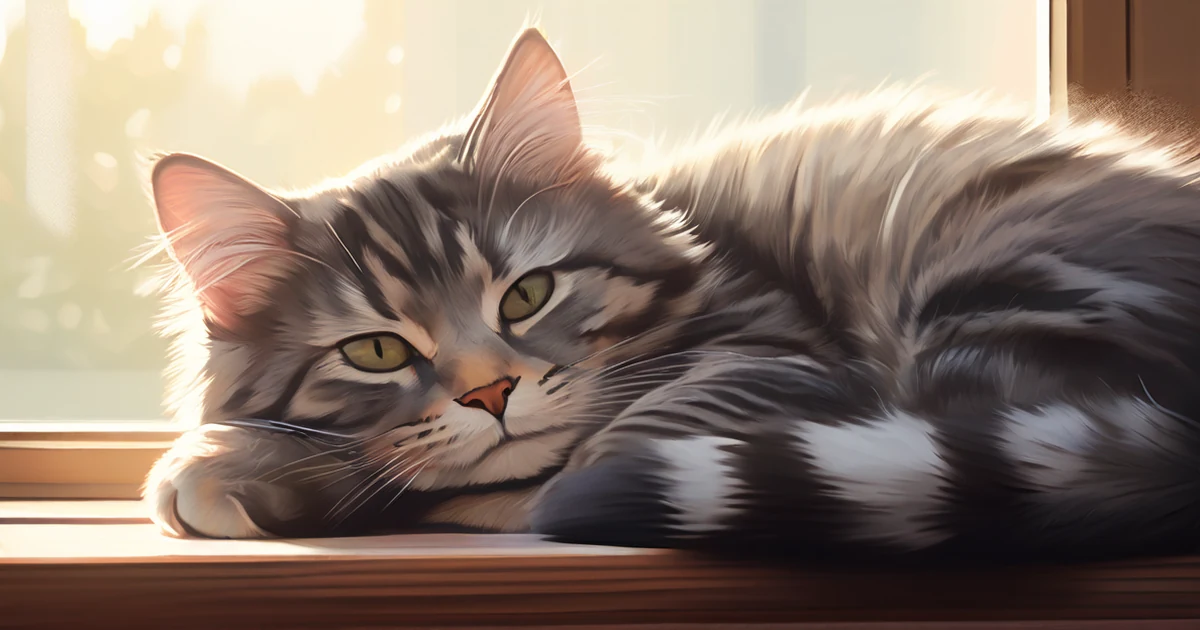
Bottom line: a healthy adult cat sleeps 12 to 16 hours a day, and kittens or cats over seven can hit 18 to 20. That is not laziness. It is the energy budget of an ambush predator, plus a sleep style that comes in dozens of short bouts rather than one long night. What looks like "sleeping all day" is usually a stack of ten-minute naps.
How many hours a day do cats actually sleep?
Behavior studies of free-ranging cats cluster between 12 and 16 hours. Indoor cats tend to sit at the top of that range because nothing forces them to be awake: no territory to patrol, no hunt that might fail, no weather to negotiate.
- Kittens: 18 to 20 hours. Growth hormone is released during deep sleep, and a growing body spends most of the day building itself.
- Adults: 12 to 16 hours, split into roughly 15 to 30 minute naps across the day and night.
- Seniors (7+): back up toward 18 hours, often with more time in light sleep and more waking at night.
- Weather: cold, rain and falling air pressure reliably add sleep. A cat that disappears under the duvet in November is behaving normally.
One detail explains a lot: a cat's sleep cycle is short. It drops into REM within minutes, stays there briefly, and surfaces again, which is why a cat can be "fast asleep" and then fully alert the moment a can opens. The total is high, but the depth is shallow.
Why do cats sleep so much? The ambush hunter's math
Cats are crepuscular ambush hunters. Their wild activity peaks at dawn and dusk, and the hunt itself is a sprint of a few seconds, not a chase. Muscle built for acceleration burns fuel fast and cannot sustain a long effort, so the body treats rest as the default state and wakefulness as a costly exception.
- Sprint, not marathon: a cat can hit roughly 30 mph but holds it for a few body lengths. Everything else is stalk, wait, and recover.
- Small meals, big sleeps: a cat that has just eaten a large meal sleeps more deeply, the same postprandial dip humans get, only longer.
- Heat management: sleep lowers body temperature slightly and saves calories. Cats run hotter than we do, around 38 to 39 degrees Celsius, and a warm radiator or a sunny windowsill is a cheaper way to stay warm than being active.
And yes, they dream. During REM the paws paddle, whiskers twitch, and the eyes move under closed lids while the body stays limp. Never shake a cat awake out of a twitching dream; call its name softly first and let it surface on its own.
Why does my cat sleep on me, or at my feet?
Cat body temperature sits a degree or two above human temperature, so a person under a blanket is the warmest, most reliable heat source in the house. But position is also a message:
- At your feet: close enough to smell you and hear you breathe, with a clear exit if it needs one. Affection with an escape route.
- On your chest or pillow: the warmest spot and the most exposed one. A cat that sleeps here has stopped considering you a risk.
- On your lap: you are pinned, so it knows you cannot get up. Maximum relaxation, minimum vigilance.
- At the foot of the bed or by the door: a watching position, common in cats that recently arrived or live with a more dominant cat.
If you want the sleeping cat to stay asleep, stop rearranging the blanket every few minutes. Repeatedly disturbed sleep makes cats edgy and quick to swat.
When sleeping too much is a red flag
Judge the cat, not the clock, and judge change rather than absolute numbers. A cat that has always slept 18 hours is fine. A cat that jumped from 13 to 20 in a week is not.
- Sleep plus appetite loss: skipping meals for more than 24 hours is a vet visit on its own.
- Slow to rise, reluctant to jump: cats hide pain well, and arthritis often shows up as "he just sleeps more now".
- Drinking and urinating more: kidney disease, diabetes and hyperthyroidism all start this way, and all three are treatable when caught early.
- Day sleeping with night yowling, staring at walls, or getting stuck in corners: the classic cluster for feline cognitive dysfunction in older cats.
- Breathing faster than 30 breaths a minute while asleep: count for 15 seconds and multiply by four. Above 30 at rest deserves a call.
If your cat is seven or older, an annual check with bloodwork costs far less than treating a condition that was missed for a year. Our guide to cat lifespan and age conversion maps out what changes at each stage.
How to keep a sleepy indoor cat healthy
Sleep is fine; a cat that sleeps because it has nothing to do is a different problem. Under-stimulated cats either sleep the day away or release the energy at 4 a.m. as night yowling and hallway sprinting.
- Two or three play sessions of 10 to 15 minutes, wand toy moving like prey: hide, dart, pause, pounce. Always let the cat catch something at the end, or the hunt never closes and the cat gets more wound up, not less.
- Feed the brain, not just the bowl: scatter kibble, use a puzzle feeder, hide a few pieces around the room. Ten minutes of nose and paw work beats ten minutes of eating.
- Give it a window: a perch with a view of birds or a street is free television and keeps a cat mentally occupied while you are out.
- Weigh monthly: sleeping 16 hours a day plus free feeding is the fastest route to obesity. Ribs should be easy to feel under a thin layer.
When you are not home, a free touchscreen cat game is a decent substitute for a moving toy, though it will never replace a real session with you. If your cat ignores screens entirely, that is normal too: not every cat responds to them.
The short version: 16 hours of sleep is a feature, not a symptom. Watch for the cat that is hard to wake, stops eating, or suddenly doubles its sleeping hours. Everything else is just a cat doing what cats have always done.
🎮 Play free — no download